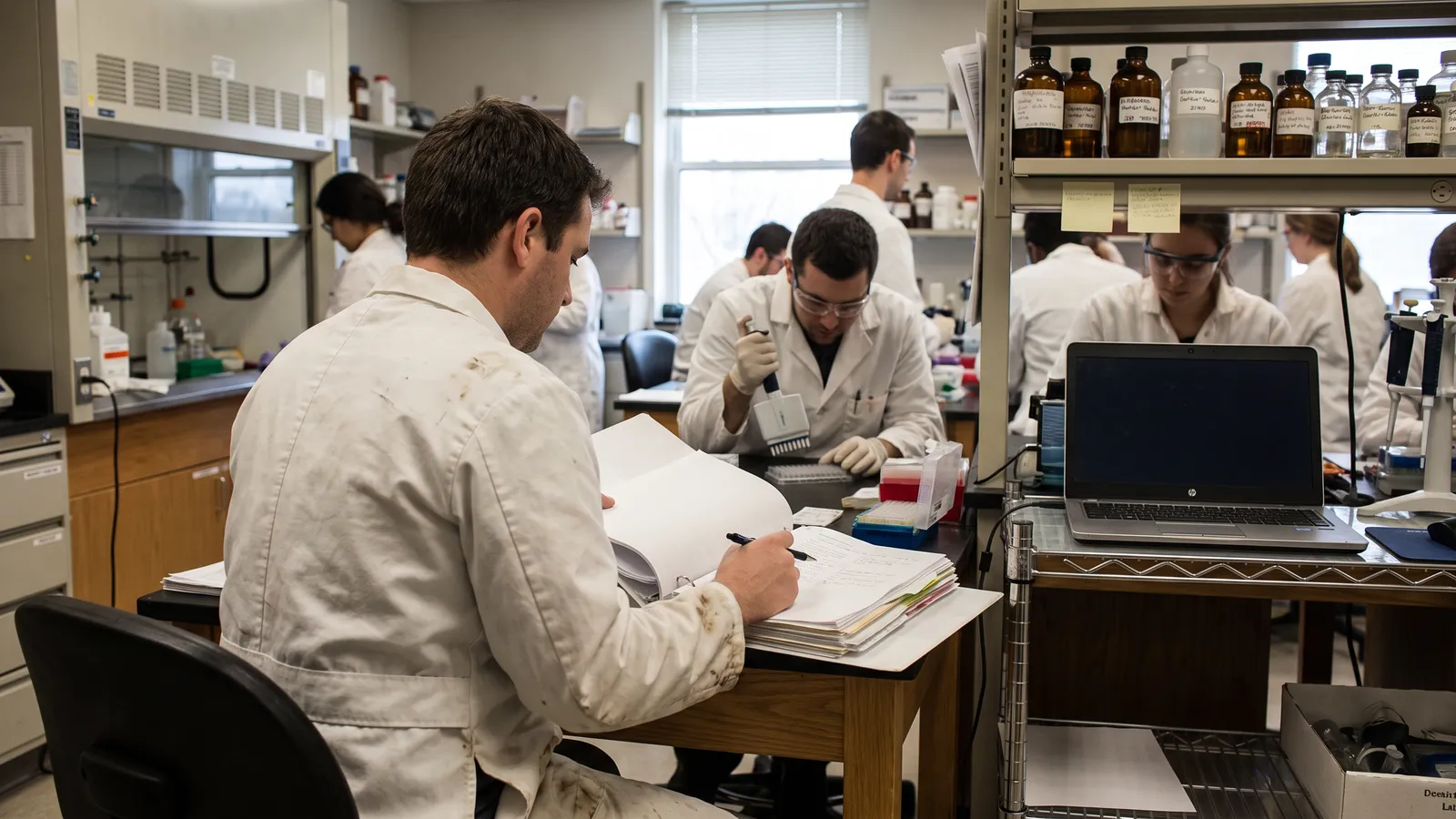
A small pharma company, a biotech or a CRO runs on writing: SOPs, protocols, study reports, deviation and CAPA investigations, regulatory submissions and the answers to agency questions, plus years of email between scientists, quality staff and sponsors. Most of it is never published, and in our reading it is the careful, checked reasoning AI companies want their models to learn from.
Polyshares rates the industry highly, marking pharma and biotech as premium in its intake, Grepped lists biotech and life sciences on its form, and clinical data managers, regulatory affairs managers and medical scientists sit near the top of O*NET's email scale. Published ranges across buyers mostly run $100K to $2M, as their own claims, and none publishes a separate price for life sciences.
Patient-level and trial data is a separate and far more sensitive matter. Start with what your team wrote about how the work gets done, such as SOPs, training material, templates and quality write-ups with no subject details, and treat every study record, sponsor file and anything touching health information as a question to work through with the buyer before anything is exported. The quiz shows which buyers take a company your size.
Worth
What a company's data may be worth
Set for a typical company, 45 staff and 8 years of records. Move the sliders to match yours. Our estimate, not an offer.
Buyers
Which buyers want this data
Buyers whose own published rules fit pharma, biotech and contract research companies. We can introduce you to the ones we work with.
micro1
Asks for SOPs, playbooks, knowledge bases and templates, and lists healthcare administration, the nearest of its target industries by our mapping.12,13
- $100K to $2M+, micro1 says8
Watch out for: Says it removes personal details only "when relevant", so ask exactly how.14
Polyshares
Marks pharma and biotech as a premium industry and says a third-party partner scrubs personal data before anything is licensed.1,15
- $100K to $2M+, Polyshares says9
- None, Polyshares says16
- An offer in 1 to 2 weeks, then paid in 30 to 60 days17
Watch out for: Exclusive by default, and every deal it lists is exclusive with no end date.18,19
Mode
Fixes systems and date ranges in writing before export and removes sensitive material before resale, from US offices with 20+ staff.20,21
Watch out for: The program launched in October 2026 and has no deal record yet.25
Grepped
Lists biotech and life sciences on its intake form, gets read-only access to approved sources only, and lets any system or record type stay out.2,26
Watch out for: Its own site code calls its estimator "deliberately optimistic", so treat any estimate as an indication.27,28
Who wants this
Do buyers want pharma, biotech and contract research companies?
No buyer publishes prices by industry, but their own intake forms show which industries they rate higher.
- Troveo puts something else (pharma and biotech are not listed) in its third of four demand tiers: "Standard buyer demand for your industry."29
- Polyshares marks pharma and biotech as a premium industry.7
Which buyers take a company your size
Shown for 45 staff, a typical company. Ask whether contractors and part-time staff count.
micro1
Polyshares
No headcount rule; the length and texture of the record matter more32
Mode
20+ full-time US office staff (accounting firms 10+, law firms 6+)21
Pewter
20+ staff and 3+ years; by industry, from 10+ (healthcare) to 50+ (manufacturing, finance)33,34,35
Grepped
No headcount minimum stated36
Ventra
30+ US employees and 3+ years of records37
Mercor
None stated38
Troveo
No minimum stated; its estimator starts at 2039
Nyne
20+ US W-2 employees and 3+ years40
Endless
Roughly 30+ employees41
Supersoniq
50+ employees and 5+ years42
What buyers value
What in a company's records buyers value
What buyers look for in your records, and what to talk through with your buyer before anything leaves your systems.
| Data | Where it lives | Why a buyer values it | Raise with the buyer |
|---|---|---|---|
| SOP library and revision history | Veeva Vault, MasterControl, SharePoint | Step-by-step procedures, revised after every audit finding, with the reason for each change. | Training sign-off records with employee names. |
| Deviation, CAPA and investigation reports | QMS, Word | Root-cause reasoning written under scrutiny, from first symptom to fix. | Batch numbers, product names and anything an inspector has on file. |
| Protocol and report templates | Word, shared drive | How a study is designed and written up, without any subject data in it. | Sponsor templates and sponsor-specific language. |
| Regulatory questions and response drafts | Email, Veeva RIM, Word | Questions from a regulator and the drafted answers, revised by several reviewers. | Unpublished product information and anything a sponsor supplied. |
| Electronic lab notebook entries | Benchling, LabArchives | Experiments planned, run and interpreted, including the ones that failed. | Unfiled inventions and partner compounds. |
| Internal email and Teams | Outlook, Microsoft Teams | Scientists, quality staff and project managers working problems out in writing. | Patient, subject and investigator names. |
A week of records
A week of data at a company
- Monday: quality closes a deviation, and the equipment cleaning SOP gets a revised step and a fresh round of training sign-offs.
- Tuesday: a scientist writes up three failed assay runs in the lab notebook, with a theory for each.
- Wednesday: the regulatory lead drafts an answer to an agency question and circulates it for four reviewers' edits.
- Thursday: the CRO project manager sends a sponsor the weekly enrollment status, built from a standard template.
- Friday: the training deck for a new SOP version goes out with a short quiz.
Process
How it works with each buyer
In each buyer's own words. Where a buyer publishes nothing, we say so.
micro1
- Internal docs, SOPs and playbooks, knowledge bases, project management workflows, internal comms, templates, CRM and workflow metadata, task histories12
- 30 to 200 employees31
- $100K-$2M+ per data package; over $1M for unique data8
- PII removed "when relevant"14
- The company keeps ownership of its data and reviews samples before release43
- Not published
Selling or closing
Selling or closing your company? License its data first
If a merger, an asset sale or a wind-down is coming, ask the buyer you're working with whether the SOPs, templates and training material could be offered on their own before files are archived, kept apart from study data and from anything an acquirer is paying for. In our reading, a closing company's process documentation is often read by no one again. Pewter takes firms that are winding down or closed if the records still exist, and SimpleClosure has handled 150+ data deals for startups that shut down.3,4
FAQ
Pharma, biotech and CROs: questions, answered
Some rate them highly. Polyshares marks pharma and biotech as a premium industry, and Grepped lists biotech and life sciences on its intake form. What micro1 lists is written work, such as SOPs, templates and internal documents, and clinical data managers and regulatory affairs managers score 100 out of 100 on O*NET's email scale.1,2,12,46
Every business is different, so this one is best talked through with the buyer you're working with. Their team goes over it with you before anything is signed.
Every business is different, so this one is best talked through with the buyer you're working with. Their team goes over it with you before anything is signed.
Every business is different, so this one is best talked through with the buyer you're working with. Their team goes over it with you before anything is signed.
Every business is different, so this one is best talked through with the buyer you're working with. Their team goes over it with you before anything is signed.
Before you sign
Questions to talk through with your buyer
Every business is different, so these are best talked through with the buyer you're working with. Their team goes over them with you before anything is signed.
Questions for this kind of business
- How are patient, subject and investigator identities found and removed, and is any health information excluded outright?
- Do sponsor agreements, MSAs or quality agreements cover the records a CRO produced while running a study?
- Could any document reveal an unfiled invention, a partner's compound or another trade secret?
- Do 21 CFR Part 11 or GxP record-keeping duties affect how copies are made and kept?
- If clinical material were ever in scope, how would consent for training use be documented?
- How do CCPA, GDPR, UK GDPR and state privacy laws apply, and is de-identified data still personal information?
- Do customer, vendor or platform contracts, NDAs or API terms restrict this?
- Could the data include privileged material or trade secrets?
- Do professional rules apply (AICPA, IRC 7216, HIPAA, ABA Model Rule 1.17, insurance agency contracts, adviser rules, state boards)?
Questions for any buyer
- Is the license exclusive, and for how long?
- Can you sublicense the data, and to whom?
- Which AI labs will receive it, and will you tell us?
- How long do you keep it, and how is it deleted?
- What is your liability cap, and who indemnifies whom?
- Will the contract ban re-identification of people in the data?
- Who removes personal data, by what method, and do we approve it first?