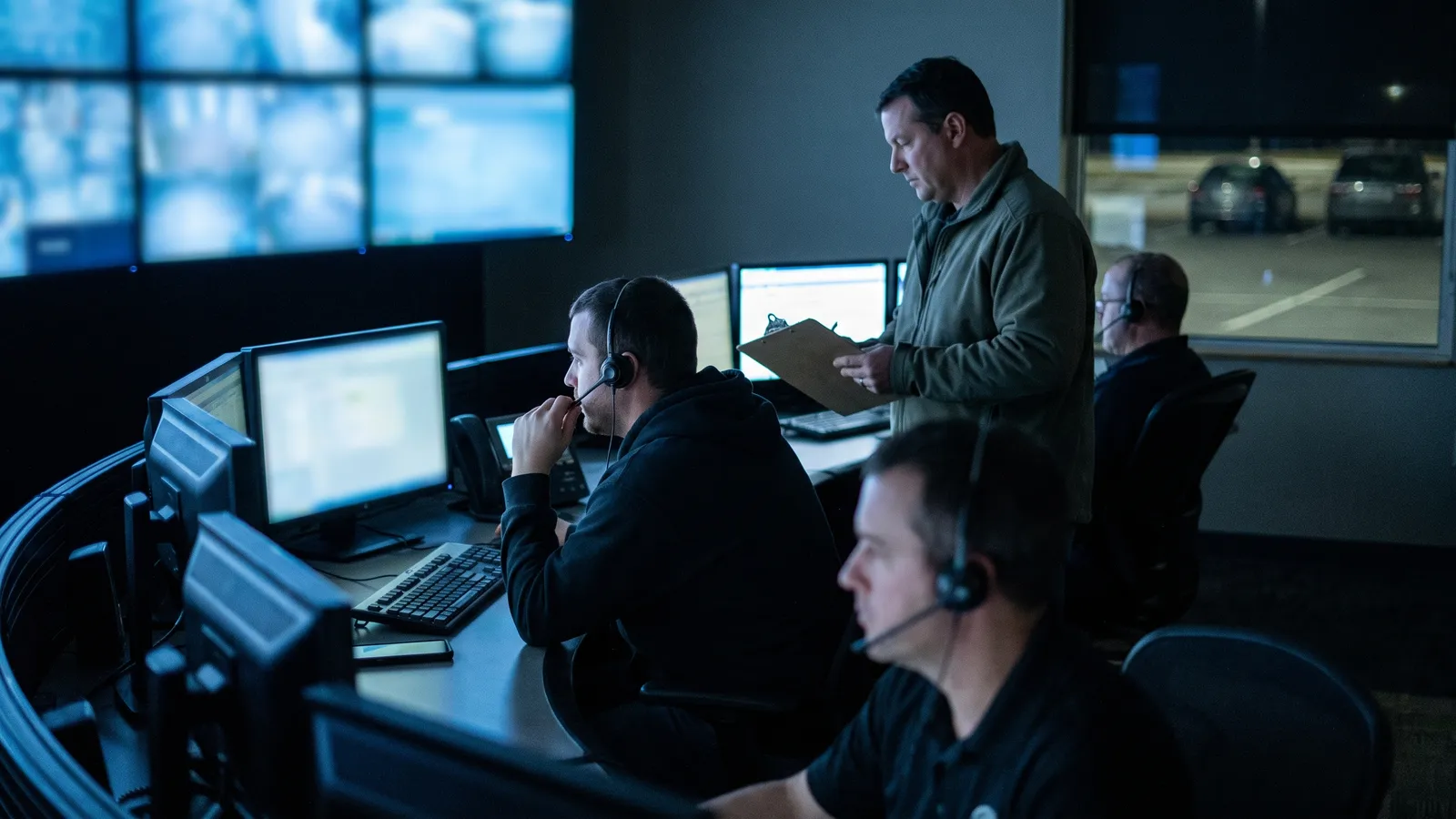
A guard company runs on paper that nobody outside the industry ever sees. Post orders tell each officer what to check and who to call, daily activity reports log every round, and an incident report turns a 2am door alarm or a fight in a parking garage into a written account a client and an insurer will read. On the alarm side, a monitoring center logs every signal, the operator's verification call, the keyholder list worked through and the decision to dispatch or cancel, while installers and service techs leave work orders behind each panel and camera they touch.
That is procedure followed and judged thousands of times, and micro1, for one, asks for exactly that kind of repeated workflow. Polyshares names Security and alarm on its intake and asks for recorded calls, Ventra lists staffing and call centers among the industries labs buy from, and Nyne names tickets, dispatch and calendars. No buyer we track has published a security company deal yet.
What makes this industry different is what must stay home: alarm codes, site floor plans, camera footage and anything that would help someone get past a client's defenses. In our reading, post orders, training material and incident narratives with names stripped are the safer place to start. Take the quiz to see which buyers take a company with your headcount.
Worth
What a company's data may be worth
Set for a typical company, 80 staff and 10 years of records. Move the sliders to match yours. Our estimate, not an offer.
Buyers
Which buyers want this data
Buyers whose own published rules fit security guard, alarm and monitoring companies. We can introduce you to the ones we work with.
Featured partners
micro1
Looks for well defined workflows that employees run again and again; post orders and alarm response procedures are written that way.11,12
- $100K to $2M+, micro1 says8
Watch out for: Says it removes personal details only "when relevant", so ask exactly how.13
Polyshares
Lists Security and alarm on its intake form and measures recorded calls in hours of audio, which is how a monitoring center keeps its operator calls.1,14
- $100K to $2M+, Polyshares says9
- None, Polyshares says15
- An offer in 1 to 2 weeks, then paid in 30 to 60 days16
Watch out for: Exclusive by default, and every deal it lists is exclusive with no end date.17,18
Mode
Buys calls and transcripts along with Zendesk tickets and documents, the systems where client complaints and service requests land.22
Watch out for: The program launched in October 2026 and has no deal record yet.26
Ventra
Lists staffing and call centers among the industries it says labs buy from, and takes US companies with 30+ staff and 3+ years of records.27,28
- $100K to $2M as potential deals, Ventra says29
- None today, though it may add fees with notice30
- An offer in 3 to 7 days, then paid on net 30 or 6029
Watch out for: Its terms say delivered data may not be deletable.31
Everyone else we reviewed
By score, with full reviews. We have no referral agreement with these companies, so we do not link out to them.
Who wants this
Do buyers want security guard, alarm and monitoring companies?
No buyer publishes prices by industry, but their own intake forms show which industries they rate higher.
- Troveo puts logistics, field service or supply chain (our closest match) in its second of four demand tiers: "Your industry carries above-average buyer demand."32
- Polyshares takes security and alarm, without marking it premium.33
Which buyers take a company your size
Shown for 80 staff, a typical company. Ask whether contractors and part-time staff count.
micro1
Polyshares
No headcount rule; the length and texture of the record matter more36
Mode
20+ full-time US office staff (accounting firms 10+, law firms 6+)37
Pewter
20+ staff and 3+ years; by industry, from 10+ (healthcare) to 50+ (manufacturing, finance)38,39,40
Grepped
No headcount minimum stated41
Ventra
30+ US employees and 3+ years of records28
Mercor
None stated42
Troveo
No minimum stated; its estimator starts at 2043
Nyne
20+ US W-2 employees and 3+ years44
Endless
Roughly 30+ employees45
Supersoniq
50+ employees and 5+ years46
What buyers value
What in a company's records buyers value
What buyers look for in your records, and what to talk through with your buyer before anything leaves your systems.
| Data | Where it lives | Why a buyer values it | Raise with the buyer |
|---|---|---|---|
| Daily activity and incident reports | Guard management apps (TrackTik, Silvertrac) or Word and PDF reports | Written accounts of what an officer saw, did and escalated, in a fixed format across thousands of shifts. | Names of victims, suspects and witnesses, and police report numbers. |
| Post orders and site procedures | Shared drive or the guard app's document library | The rules each officer works from, site by site, and the clearest record of the company's own method. | Site layouts, access points and anything a client would treat as a security plan. |
| Monitoring center event and operator logs | Central station automation software | Signal, verification, call list and outcome for every alarm, a decision trail with a time stamp on each step. | Subscriber names, addresses and passcodes inside the account notes. |
| Operator and dispatch call recordings | Phone system at the central station | Real conversations with homeowners, keyholders and police dispatch, under pressure and on a script. | Whether every party heard a recording notice. |
| Install and service work orders | Field service or alarm dealer software | Site surveys, equipment lists and the fix for each trouble signal, the technical side of the business. | Nothing specific |
| Scheduling and shift coverage records | Scheduling module, email and text threads | How a callout at 10pm gets covered, overtime gets approved and a post never goes empty. | Officer personal details, license numbers and pay rates. |
A week of records
A week of data at a company
- Monday: officers at each post file activity reports for the weekend, and any incidents are written up for the client.
- Tuesday: the monitoring center works a storm night of low battery and power fail signals, most cancelled by phone.
- Wednesday: an installer files a site survey and proposal for a warehouse camera system.
- Thursday: a client emails a complaint about a missed round, and the supervisor's reply cites the patrol scan log.
- Friday: the scheduler fills weekend gaps by text and the training lead updates a post order after a site change.
Process
How it works with each buyer
In each buyer's own words. Where a buyer publishes nothing, we say so.
micro1
- Internal docs, SOPs and playbooks, knowledge bases, project management workflows, internal comms, templates, CRM and workflow metadata, task histories12
- 30 to 200 employees35
- $100K-$2M+ per data package; over $1M for unique data8
- PII removed "when relevant"13
- The company keeps ownership of its data and reviews samples before release47
- Not published
Polyshares
Selling or closing
Selling or closing your company? License its data first
In our reading, guard companies and alarm dealers are bought mostly for their client contracts and monitored accounts. When accounts or a guard book change hands, the written record behind them is a different set of records, and whether a copy could be offered before the sale is a question to talk through with the buyer you're working with. Pewter takes companies that are operating, winding down or closed with 20+ people now or at their peak, and micro1's ads ask for closed companies that had 25+ employees at their peak.3,4
FAQ
Security guard and alarm companies: questions, answered
Polyshares lists Security and alarm on its intake, and in our reading the written record is what counts: daily activity reports, incident reports and post orders. We have found no published deal for a security company, so the price is set once a buyer sees your records.1
Yes. Security guards score 83 out of 100 on O*NET's email scale and their supervisors 98, so this is a writing job more than most people think. Ask the buyer which export format it takes from your guard app, whether text or PDF.2
Every business is different, so this one is best talked through with the buyer you're working with. Their team goes over it with you before anything is signed.
Every business is different, so this one is best talked through with the buyer you're working with. Their team goes over it with you before anything is signed.
Before you sign
Questions to talk through with your buyer
Every business is different, so these are best talked through with the buyer you're working with. Their team goes over them with you before anything is signed.
Questions for this kind of business
- Do state guard licensing rules or client confidentiality terms reach incident reports?
- How are the names of victims, suspects and witnesses removed from narratives, and who checks?
- Could any record in the scope help someone get past a client's alarm or patrol, and who decides?
- How do CCPA, GDPR, UK GDPR and state privacy laws apply, and is de-identified data still personal information?
- How are employee data, union contracts and NLRA questions handled?
- Do customer, vendor or platform contracts, NDAs or API terms restrict this?
Questions for any buyer
- Is the license exclusive, and for how long?
- Can you sublicense the data, and to whom?
- Which AI labs will receive it, and will you tell us?
- How long do you keep it, and how is it deleted?
- What is your liability cap, and who indemnifies whom?
- Will the contract ban re-identification of people in the data?
- Who removes personal data, by what method, and do we approve it first?