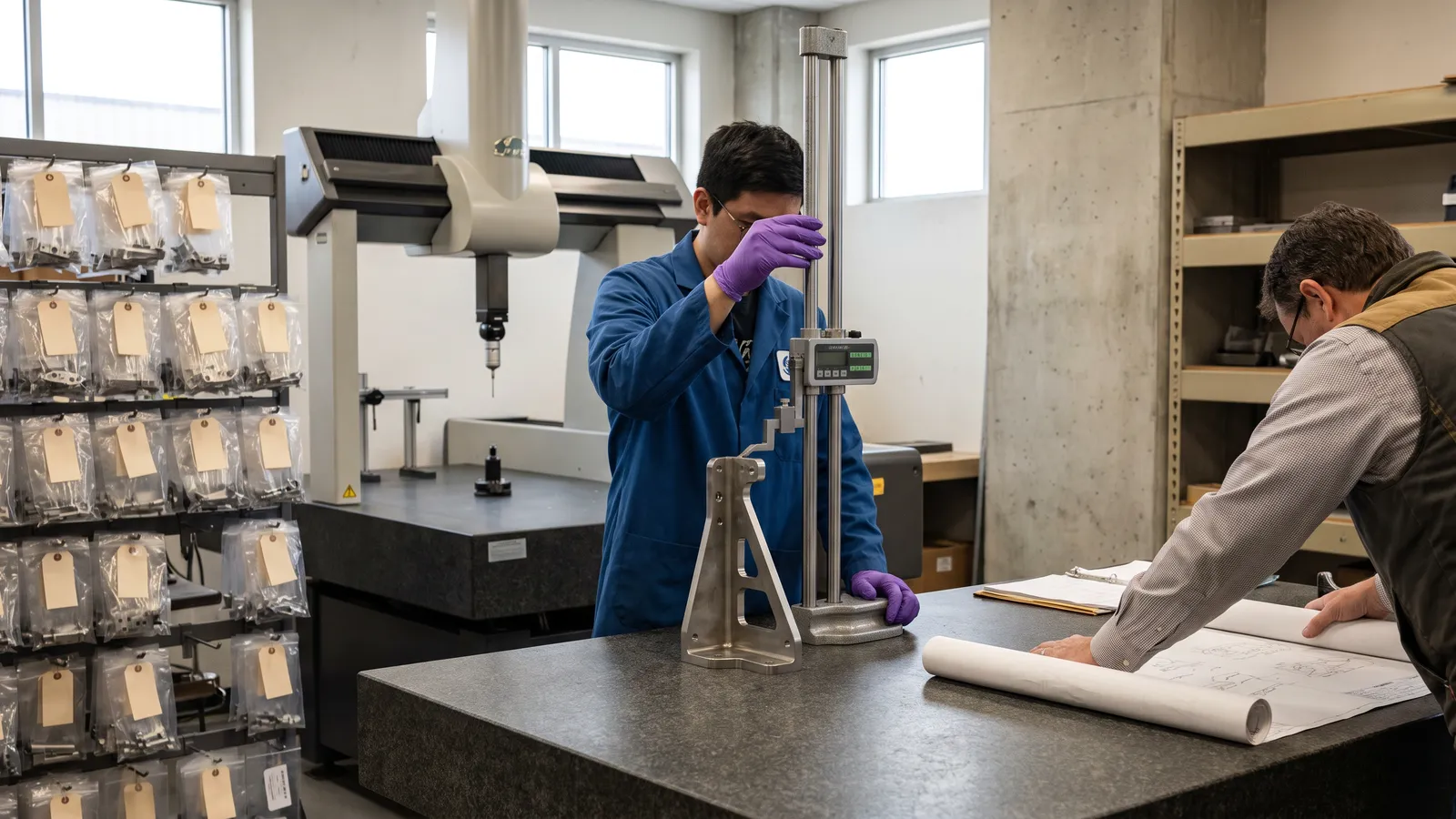
A tier 2 or tier 3 aerospace supplier keeps more paperwork per part than almost any other kind of shop. Every lot has a traveler, a first article inspection, material certs traced back to the mill, special process certs, and an NCR with a disposition when something misses the print, and every engineering change ripples through routings, inspection plans and the customer's approval. The quality system, the corrective action history and the quoting files around them record how a tightly controlled shop makes hardware to a standard.
Some buyers name the industry outright. Polyshares lists aerospace and defense, and government contracting, as intake industries of their own, and Ventra says labs look specifically for CAD libraries and engineering records such as drawings, test results and change logs. Aerospace engineers score 98 out of 100 on O*NET's email scale and aviation inspectors 99, so in our reading the written record runs deep. Troveo's assessment rates engineering in its top tier and manufacturing in its second; neither names aerospace, so which one fits a supplier is our mapping, and the first call is the place to describe the engineering side of your work.
In our reading it is also the niche with the most to screen. Troveo's own guides list export-controlled technical data, customers' designs and current programs among what Troveo says comes out first, and it says many companies start with retired platforms and completed programs. Defense work adds questions about controlled information and prime contractor terms that the buyer you're working with has to talk through with you, so they sit in the list below rather than in our answers. Your quality manual and your own training material are, in our reading, the cleaner piles to raise first.
Worth
What a supplier's data may be worth
Set for a typical supplier, 60 staff and 15 years of records. Move the sliders to match yours. Our estimate, not an offer.
Buyers
Which buyers want this data
Buyers whose own published rules fit aerospace and defense suppliers. We can introduce you to the ones we work with.
Featured partners
Polyshares
Lists Aerospace and defense and Government contracting as intake industries of their own, sets no headcount floor, and excludes data held on behalf of clients.1,15,16
- $100K to $2M+, Polyshares says13
- None, Polyshares says17
- An offer in 1 to 2 weeks, then paid in 30 to 60 days18
Watch out for: Exclusive by default, and every deal it lists is exclusive with no end date.19,20
Pewter
Has Manufacturing on its offer form, says regulated, privileged or third-party records may be excluded from a deal, and takes US firms with 20+ full-time staff.21,22
Watch out for: Its site was registered in October 2026 and names no people.25,26
Grepped
Lists manufacturing, semiconductors, and chemistry and materials on its intake form, asks you to share only data you have the right to share, and notes that customer contracts can restrict use.27,28
Watch out for: Its own site code calls its estimator "deliberately optimistic", so treat any estimate as an indication.29,30
Ventra
Says labs look specifically for CAD libraries, including mechanical parts and assemblies, and engineering records; it names manufacturing among its industries and takes US companies with 30+ employees.31,32,33
- $100K to $2M as potential deals, Ventra says34
- None today, though it may add fees with notice35
- An offer in 3 to 7 days, then paid on net 30 or 6034
Watch out for: Its terms say delivered data may not be deletable.36
Everyone else we reviewed
By score, with full reviews. We have no referral agreement with these companies, so we do not link out to them.
Troveo
Its own engineering and automotive guides list export-controlled technical data and customers' designs among what Troveo says to leave out, and it sets no minimum headcount.2,3,37
- Six figures and up for a whole company, Troveo says38
- A share of the revenue; the percentage is not published39
Watch out for: You are paid from a revenue share, so ask what percentage you keep.39
Who wants this
Do buyers want aerospace and defense suppliers?
No buyer publishes prices by industry, but their own intake forms show which industries they rate higher.
- Troveo puts manufacturing or industrial (our closest match) in its second of four demand tiers: "Your industry carries above-average buyer demand."10
- Polyshares takes aerospace and defense, without marking it premium.40
- VMS, a broker, gives manufacturing (our closest match) standard weight when it estimates value.41
Which buyers take a supplier your size
Shown for 60 staff, a typical supplier. Ask whether contractors and part-time staff count.
micro1
Polyshares
No headcount rule; the length and texture of the record matter more15
Mode
20+ full-time US office staff (accounting firms 10+, law firms 6+)44
Pewter
20+ staff and 3+ years; by industry, from 10+ (healthcare) to 50+ (manufacturing, finance)45,46,47
Grepped
No headcount minimum stated48
Ventra
30+ US employees and 3+ years of records33
Mercor
None stated49
Troveo
No minimum stated; its estimator starts at 2037
Nyne
20+ US W-2 employees and 3+ years50
Endless
Roughly 30+ employees51
Supersoniq
50+ employees and 5+ years52
What buyers value
What in a supplier's records buyers value
What buyers look for in your records, and what to talk through with your buyer before anything leaves your systems.
| Data | Where it lives | Why a buyer values it | Raise with the buyer |
|---|---|---|---|
| First article inspection reports | Quality system, inspection software and PDFs | Every characteristic on the print measured and signed off before a part goes to production. | Customer drawings and part numbers on each report. |
| NCRs, corrective actions and MRB dispositions | Quality management system or Excel | A nonconformance, the root cause argued in writing, and whether the part was reworked, scrapped or used as is. | Customer and program names. |
| Travelers, routings and special process certs | ERP (Epicor, JobBOSS, SAP) and paper travelers | The full path of a lot, including heat treat, plating and NDT steps and the cert behind each one. | Nothing specific |
| Engineering change and configuration records | PLM, ERP revision history and email | Why a revision happened and every document it touched. | Drawings and specifications that may be export-controlled. |
| Quality manual, procedures and training | Shared drive or a document control system | Your own system for building hardware to a standard, written by your people. | Nothing specific |
| Supplier qualification and purchasing records | ERP and the purchasing inbox | How you approve a sub-tier supplier, pass requirements down to it and chase late material. | Supplier pricing and sub-tier audit reports. |
| Quotes and proposal files | Spreadsheets, email and proposal folders | How an RFQ became a price and a lead time, and which quotes won. | Cost data submitted on government work and customer target prices. |
A week of records
A week of data at a supplier
- Monday: a purchase order arrives with a revised drawing, and engineering logs the change against open travelers.
- Tuesday: first article inspection on a new bracket, with every balloon on the print measured and recorded.
- Wednesday: a heat treat cert comes back with a hardness reading at the limit, and quality opens an NCR.
- Thursday: the material review board meets, documents a rework disposition and updates the inspection plan.
- Friday: purchasing chases late bar stock from a sub-tier mill, and shipping packs certs with the week's lots.
Process
How it works with each buyer
In each buyer's own words. Where a buyer publishes nothing, we say so.
Polyshares
Selling or closing
Selling or closing your supplier? License its data first
If you are selling the company, one law firm says to expect the acquirer to ask about any data license in diligence, including exclusivity and what was screened out. Foley and Lardner writes that training-data rights have become a diligence category of their own in AI-related deals, with buyers seeking representations, indemnities and escrow, so keep the scope and exclusion log with your sale documents. Troveo says many companies start with retired platforms and completed programs rather than active work.4,5,3
FAQ
Aerospace and defense suppliers: questions, answered
Some name the industry. Polyshares lists aerospace and defense and government contracting as intake industries, and Ventra says labs look for CAD libraries and engineering records. Grepped and VMS have no aerospace option, so by our mapping a supplier would pick manufacturing, or VMS's PCB or electronics assembly for board work.1,31,27,56
The same kinds buyers name for manufacturers and engineering firms: CAD and drawings, test and inspection records, change requests and revision history, and production and quality records. Troveo says records that show a checkable outcome, such as a first article that passed, license most readily.57,58,59
Troveo's own guides list export-controlled technical data, customers' designs and test data, licensed standards, supplier rates received in confidence and current programs as what it takes out first, and say many companies start with retired platforms and completed programs. That is Troveo's policy, and its guide says it is not legal advice; whether any of your files are controlled is a question to talk through with the buyer you're working with.3,2
Every business is different, so this one is best talked through with the buyer you're working with. Their team goes over it with you before anything is signed.
Every business is different, so this one is best talked through with the buyer you're working with. Their team goes over it with you before anything is signed.
Every business is different, so this one is best talked through with the buyer you're working with. Their team goes over it with you before anything is signed.
Before you sign
Questions to talk through with your buyer
Every business is different, so these are best talked through with the buyer you're working with. Their team goes over them with you before anything is signed.
Questions for this kind of business
- Who screens drawings, models and test data for ITAR or EAR technical data, and who signs off before anything leaves our systems?
- Does any controlled unclassified information (CUI) sit in our email, file shares or ERP, and how is it identified and excluded?
- Do DFARS clauses, CMMC requirements or prime contractor flow-downs in our purchase orders cover this data?
- Do customer quality agreements give primes or OEMs rights in first article, inspection or test records?
- Would a buyer's foreign ownership, staff or hosting location matter for any records we include?
- Who owns this data: the company, an estate, or someone else?
- Do customer, vendor or platform contracts, NDAs or API terms restrict this?
- Could the data include privileged material or trade secrets?
- How does a license affect a sale of the business: reps and warranties, change of control, earnouts, exclusivity?
Questions for any buyer
- Is the license exclusive, and for how long?
- Can you sublicense the data, and to whom?
- Which AI labs will receive it, and will you tell us?
- How long do you keep it, and how is it deleted?
- What is your liability cap, and who indemnifies whom?
- Will the contract ban re-identification of people in the data?
- Who removes personal data, by what method, and do we approve it first?