Updated October 2026
Selling trucking company data for AI training: what it's worth and who buys it
Nyne has run Meta ads headed "Your Old Dispatch Data Could Be Worth Six Figures", naming dispatch logs and load histories.1
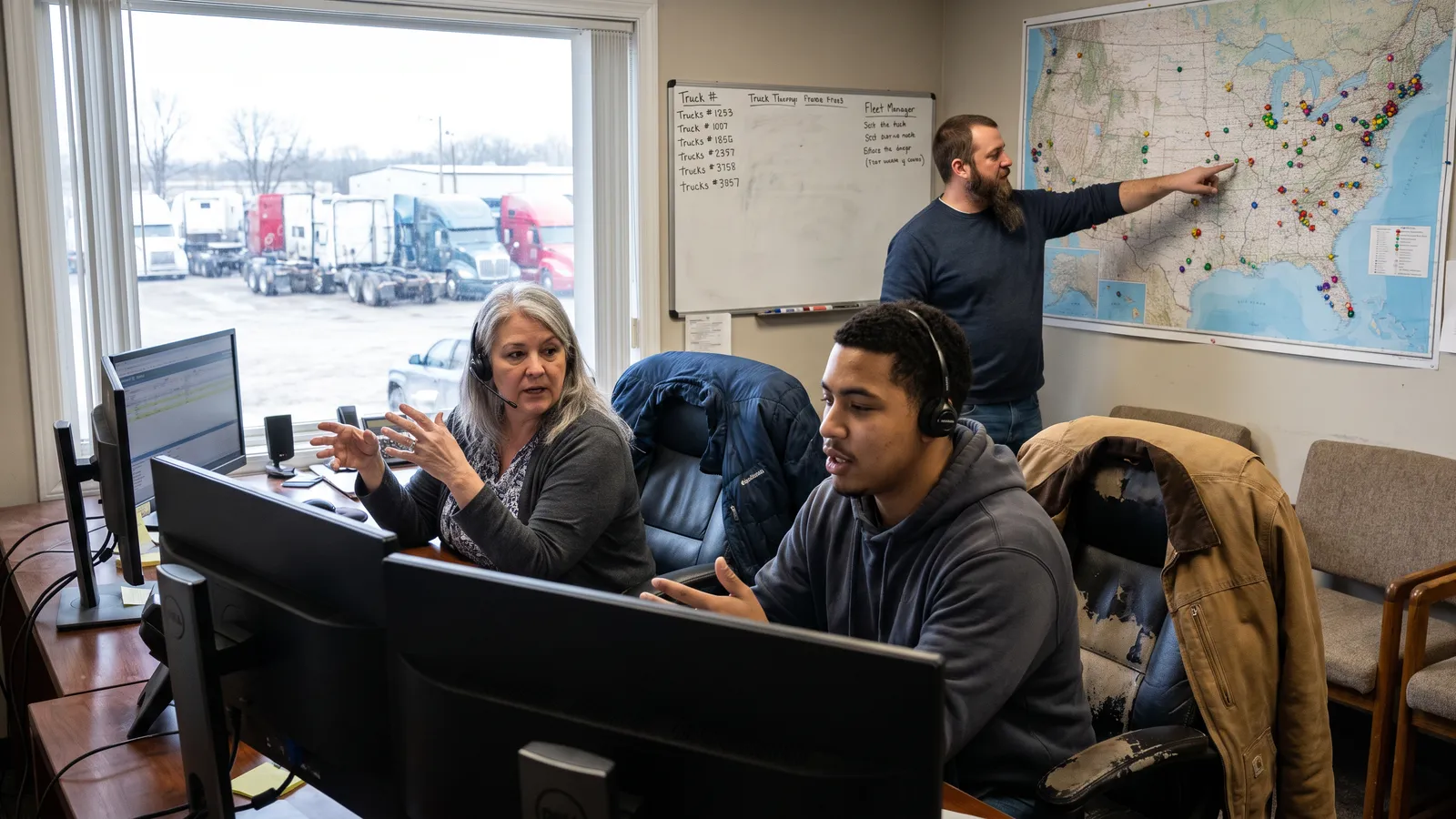
A trucking company's dispatcher solves a puzzle that changes by the hour. Which driver has the hours left to make a 6am appointment 480 miles away? Who is closest when a load comes off a broker's board at a good rate? What happens when a tractor breaks down outside Amarillo with a reefer load on? Planners, dispatchers, fleet managers and safety staff write those decisions into the TMS, the ELD notes and a constant stream of texts and calls.
That is a different record from a freight broker's. A carrier owns the trucks and employs the drivers, so its data is about assets, hours and maintenance as much as price. Nyne has advertised directly to trucking companies about dispatch data, and Mercor lists dispatch logs and shipping manifests for logistics. Dispatchers score 90 on O*NET's email scale while drivers score 58, so the written record sits in the office.
This page is for asset-based truckload carriers with ten or more employees, including dedicated and regional fleets. It covers a week of dispatch data, which buyers fit, why driver records and ELD data need separate handling, and what to ask before licensing.
Worth
What a carrier's data may be worth
Set for a typical carrier, 60 staff and 12 years of records. Move the sliders to match yours. Our estimate, not an offer.
Buyers
Which buyers want this data
Buyers whose own published rules fit truckload carriers. We can introduce you to the ones we work with.
Featured partners
micro1
Names logistics and operations businesses and asks for SOPs and repeated workflows, which is how a dispatch desk runs.9,10
- $100K to $2M+, micro1 says6
Watch out for: Says it removes personal details only "when relevant", so ask exactly how.11
Everyone else we reviewed
By score, with full reviews. We have no referral agreement with these companies, so we do not link out to them.
Mercor
Names logistics and supply chain and lists shipping manifests, dispatch logs and invoices.12,13
Watch out for: It confirmed a cyberattack in 2026, and class actions followed.17,18
Nyne AI
Names dispatch and scheduling data, has run ads aimed at trucking dispatch data, and takes firms with 20+ US W-2 staff.2,1,19
- $100K or more, Nyne says20
Watch out for: Pays only after the dataset is accepted, and publishes no timeline.21
Troveo
Names shipment, dispatch and claims records in its logistics guide.22
- Six figures and up for a whole company, Troveo says23
- A share of the revenue; the percentage is not published24
Watch out for: You are paid from a revenue share, so ask what percentage you keep.24
Who wants this
Do buyers want truckload carriers?
No buyer publishes prices by industry, but their own intake forms show which industries they rate higher.
- Troveo puts logistics, field service or supply chain in its second of four demand tiers: "Your industry carries above-average buyer demand."25
- Polyshares takes logistics and freight, without marking it premium.26
- VMS, a broker, gives freight, logistics or 3pl extra weight when it estimates value.27
Which buyers take a carrier your size
Shown for 60 staff, a typical carrier. Ask whether contractors and part-time staff count.
micro1
Polyshares
No headcount rule; the length and texture of the record matter more30
Mode
20+ full-time US office staff (accounting firms 10+, law firms 6+)31
Pewter
20+ staff and 3+ years; by industry, from 10+ (healthcare) to 50+ (manufacturing, finance)32,33,34
Grepped
No headcount minimum stated35
Ventra
30+ US employees and 3+ years of records36
Mercor
None stated37
Troveo
No minimum stated; its estimator starts at 2038
Nyne
20+ US W-2 employees and 3+ years19
Endless
Roughly 30+ employees39
Supersoniq
50+ employees and 5+ years40
What buyers value
What in a carrier's records buyers value
What buyers look for in your records, and what to talk through with your buyer before anything leaves your systems.
| Data | Where it lives | Why a buyer values it | Raise with the buyer |
|---|---|---|---|
| Dispatch and load planning records | TMS (McLeod, TMW, Rose Rocket) | Which driver and truck took which load and why, against hours and appointments. | Driver names and phone numbers. |
| Breakdown and exception logs | TMS notes, maintenance system, texts | A failure on the road and the chain of calls and decisions that recovered the load. | Nothing specific |
| Maintenance and repair orders | Fleet maintenance software | Symptoms, diagnosis and repairs per unit over years, linked to downtime. | Nothing specific |
| Customer and broker email | Outlook, load board messages | Rate negotiations, appointment changes and detention disputes in writing. | Shipper and broker rate terms. |
| Safety and compliance files | Safety software, driver qualification files | How a carrier reviews incidents and coaches drivers. | Driver qualification files, medical cards and ELD logs. |
A week of records
A week of data at a carrier
- Monday: 120 loads planned for the week, with notes on two drivers short on hours.
- Tuesday: a breakdown in Texas, a rescue tractor sent and the receiver's appointment moved by email.
- Wednesday: three spot loads booked off the board after a rate negotiation logged in the TMS.
- Thursday: a detention dispute with a shipper, documented with timestamps.
- Friday: the maintenance shop closes six repair orders, one a repeat failure flagged to the fleet manager.
Process
How it works with each buyer
In each buyer's own words. Where a buyer publishes nothing, we say so.
micro1
- Internal docs, SOPs and playbooks, knowledge bases, project management workflows, internal comms, templates, CRM and workflow metadata, task histories41
- 30 to 200 employees29
- $100K-$2M+ per data package; over $1M for unique data6
- PII removed "when relevant"11
- The company keeps ownership of its data and reviews samples before release42
- Not published
Mercor
Nyne AI
Selling or closing
Selling or closing your carrier? License its data first
When a trucking company is sold, the buyer usually wants the trucks, the drivers and the customer lanes, and owners often ask how much a trucking company can sell for long before they list it. Years of dispatch, maintenance and exception records are a different set of records. Ask each licensing company whether they can be licensed before a sale and how driver records will be kept out.1,2
FAQ
Truckload carriers: questions, answered
No. Nyne says you can exclude data categories entirely, and in our reading driver qualification files, medical cards and personal details are best left out of any first package.49
Drivers score 58 on O*NET's email scale and dispatchers 90. The dispatch desk, planners and maintenance office write the record buyers want, so describe the archive by those systems.4
Every business is different, so this one is best talked through with the buyer you're working with. Their team goes over it with you before anything is signed.
Every business is different, so this one is best talked through with the buyer you're working with. Their team goes over it with you before anything is signed.
Before you sign
Questions to talk through with your buyer
Every business is different, so these are best talked through with the buyer you're working with. Their team goes over them with you before anything is signed.
Questions for this kind of business
- How are driver names, license numbers and medical details removed?
- Which customer contracts treat rates and lane data as confidential?
- Are any records held under federal safety recordkeeping rules that limit sharing?
- How do CCPA, GDPR, UK GDPR and state privacy laws apply, and is de-identified data still personal information?
- How are employee data, union contracts and NLRA questions handled?
- Do customer, vendor or platform contracts, NDAs or API terms restrict this?
Questions for any buyer
- Is the license exclusive, and for how long?
- Can you sublicense the data, and to whom?
- Which AI labs will receive it, and will you tell us?
- How long do you keep it, and how is it deleted?
- What is your liability cap, and who indemnifies whom?
- Will the contract ban re-identification of people in the data?
- Who removes personal data, by what method, and do we approve it first?